
How Many Passengers? What Features, and Why They’re the Rockstars of the Road!
When most people hear the words “party bus,” their imagination fires up with neon lights, pounding music, and a rolling nightclub on wheels. And that’s fair — but the reality is even better. Party buses come in a wide range of sizes and configurations, each engineered to maximize fun while handling very practical details like passenger count, seating layout, and safety. Today, let’s geek out on the technical side of party buses: their capacities, lighting systems, sound rigs, and accessories that turn any night out into a mobile festival.
Passenger Counts: From Intimate Crews to Full-On Squads
Party buses aren’t a one-size-fits-all vehicle. Manufacturers design them in tiers to suit different group sizes.
- Mini Party Buses (10–15 passengers): These are often built on sprinter van or shuttle bus platforms. They’re compact but pack in surprisingly advanced lighting and sound for smaller groups. Perfect for bachelor/bachelorette parties that don’t want to feel swallowed up by space.
- Mid-Size Buses (20–30 passengers): This is the sweet spot for most nights out. Enough room for movement, dancing, and that “rolling lounge” vibe. Mid-sizers often feature wraparound seating and multiple subwoofers.
- Large Party Buses (40–50+ passengers): Now we’re in “mobile nightclub” territory. These monsters, built on full coach or school bus chassis, often include dual dance poles, multiple flat-screen TVs, and separate lighting zones. You’re not just riding to the event — you’ve become the event.
If you’ve ever wondered why the capacity matters beyond just fitting people: weight distribution, suspension design, and even AC capacity all scale with passenger count. That’s why some of the biggest models run HVAC systems closer to what you’d find in a Prevost coach than a city bus.
Lighting Systems: Setting the Mood with Circuits and LEDs
Lighting is the unsung hero of any party bus. Sure, you could throw a speaker in a van and call it “fun,” but without lighting, it’s just another vehicle.
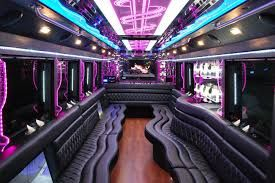
- LED Strips & RGB Systems: Almost all modern buses use programmable RGB LED strips running along ceiling coves and under seating. Many companies install DMX-controlled lighting for club-grade effects.
- Laser and Strobe Units: Integrated mini-laser projectors shoot green and red pinpoints across the ceiling, while strobes sync with the bass for that all-important “drop.”
- Blacklights & UV Accents: Some setups include blacklight bars that make white clothing glow. Technically, these are 365–400nm UV LEDs. Practically, they’re instant rave mode.
- Fiber Optic Star Ceilings: Borrowed straight from the limousine world, star panels mimic constellations. I’ve seen buses with over 2,000 fiber strands woven into the ceiling for that “galaxy ride” effect.
Lighting turns a commute into a show. Every circuit, every diode is part of the choreography.
Sound Systems: Moving the Air, Moving the Crowd
I can’t stress this enough — the sound system makes the bus. The biggest difference between a decent party bus and a legendary one is how hard the bass hits.
- Head Units & DSPs: Most buses use aftermarket double-DIN head units paired with a digital sound processor (DSP) to balance multiple zones. This lets the driver keep volume lower in the cockpit while the back roars.
- Amplification: You’ll see multi-channel amps pushing thousands of watts. Brands like Rockford Fosgate and JL Audio dominate here.
- Speakers & Subwoofers: High-end buses run full component speaker setups with separate tweeters, mids, and 12–15 inch subwoofers. It’s not unusual for a big bus to run six subs powered at 500W each. That’s chest-thumping territory.
- Integration with Screens: Many systems tie directly to onboard TVs, so you can stream Spotify playlists, YouTube videos, or even karaoke tracks.
Here’s the fun part: because the interior is essentially a rolling metal box with padded seats, acoustics are tighter than a house party. The bass reflects, compresses, and surrounds you in a way that’s honestly addictive.
Accessories: The Little Things That Make the Night
Beyond lighting and sound, the real joy of party buses is in the accessories that elevate the ride.
- Dance Poles: Usually chrome, usually bolted straight through the floor into reinforced plates. They’re not gimmicks — these are structural.
- Bars and Coolers: Many buses have built-in ice chests or full wet bars. Some even integrate LED-lit cupholders with spill drains routed to exterior tanks.
- Flat-Screen TVs: From 24-inch screens up front to 60-inch monsters on side walls. Hook up a PlayStation, stream a UFC fight, or just play custom visuals.
- Fog Machines: Yep, some buses carry compact foggers. Combined with lasers, the effect is bonkers.
- Restrooms (on large models): Not glamorous, but absolutely essential for all-night rides. These usually feature vacuum-flush systems similar to RVs.
Accessories are about freedom. Don’t want to leave the bus all night? You don’t have to.
Safety and Technical Considerations
Fun is king, but safety is queen. Party buses operate under commercial vehicle regulations, which means a few behind-the-scenes tech features matter:
- Reinforced Flooring: Because dancing adds dynamic load, floors are reinforced beyond normal shuttle spec.
- Emergency Exits: Federal law requires multiple exit points, often hidden in side windows or roof hatches.
- Suspension: Many large buses use air-ride systems for smoother cruising and to prevent people from losing balance when dancing.
- Electrical Systems: Lighting and sound demand more amperage than a standard alternator can provide. Big buses often run dual alternators or secondary battery banks with inverters.
These aren’t just toys — they’re machines designed to handle both entertainment and transportation with engineering precision.
Why Party Buses Are the Future of Mobile Entertainment
Here’s my favorite part of this whole world: party buses merge automotive engineering with entertainment tech. It’s not just about moving people; it’s about creating a shared experience. The lighting rigs are cousins of touring stage setups. The sound systems rival concert halls. The accessories feel like amusement park rides.
And unlike clubs, where you’re bound to one location, a party bus takes the show anywhere — a winery tour, a downtown crawl, a wedding afterparty, or even just a rolling celebration for the sake of it.
Manufacturers like Grech Motors and LGE Coachworks continue to push designs further each year, with new lighting systems, digital integrations, and energy-efficient builds.
For me, the fun is in the details: the cabling hidden under the floor, the reinforced anchor points, the way a DSP is tuned to make the mid-bass feel just right at 25 mph. These aren’t things most people think about — but they’re what make the difference between a “bus with speakers” and a legendary rolling party.

Final Thoughts
Party buses are proof that transportation doesn’t have to be boring. From small sprinter-based lounges to 50-passenger rolling nightclubs, each design balances engineering and fun in a way that keeps me fascinated every time I step aboard. Whether you’re there for the LED galaxy ceilings, the subwoofer boom, or just the joy of being with friends in a space built for connection, these vehicles are marvels of event tech.
So next time you see a glowing bus rolling past on a Saturday night, remember: behind those tinted windows is a symphony of circuits, LEDs, reinforced flooring, and perfectly tuned speakers — all working together to turn a ride into an unforgettable night.