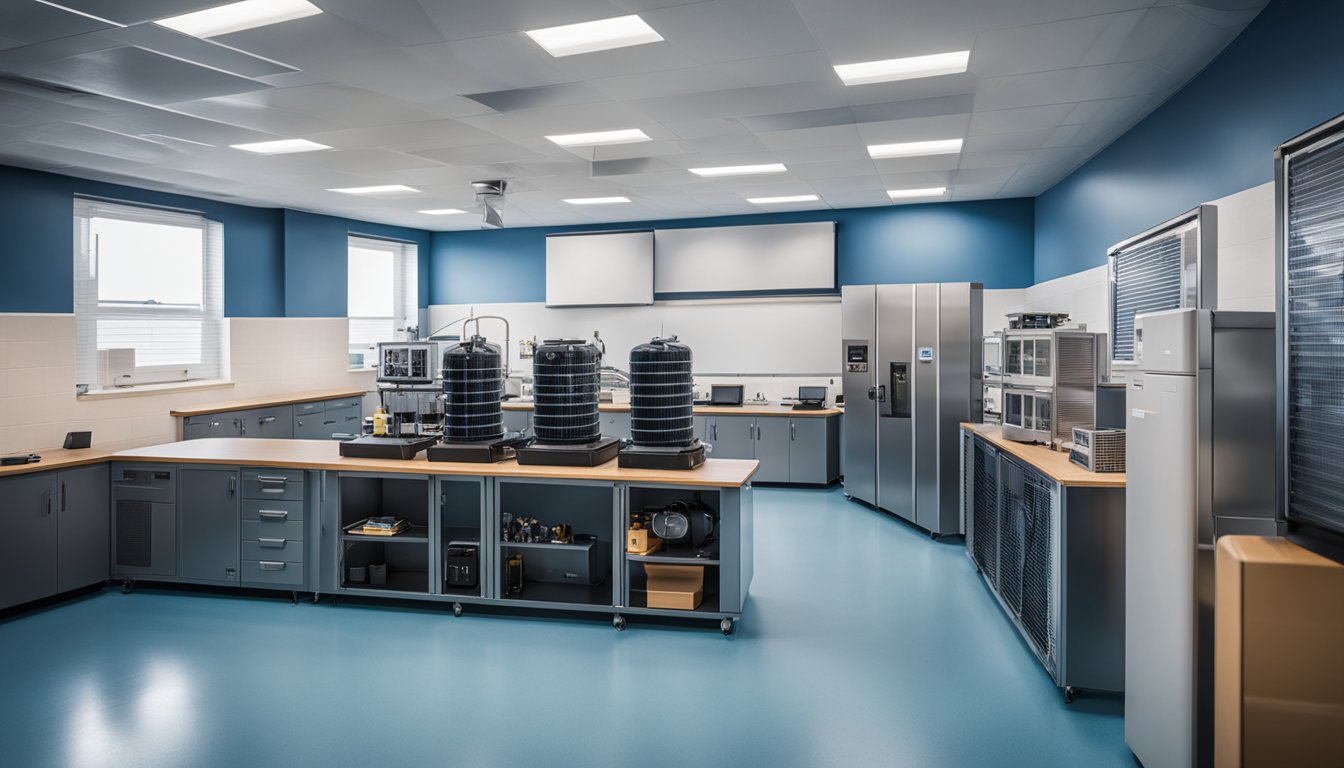
Refrigeration and CO2 Training Courses
Refrigeration and CO2 training courses are becoming more important in today’s industry. These programs teach vital skills for working with carbon dioxide as a refrigerant. CO2 refrigeration systems operate at higher pressures than traditional systems, requiring specialized knowledge for safe and efficient handling.
We’ve seen a growing demand for CO2 refrigeration experts. Many companies now seek technicians with CO2-specific certifications. These courses cover topics like system design, installation, and maintenance. They also teach about CO2’s unique properties as a refrigerant.
Training programs often include both classroom learning and hands-on practice. Students learn about safety procedures, troubleshooting, and system optimization. Some courses even offer virtual reality simulations to enhance the learning experience. With proper training, technicians can confidently work on CO2 systems in various settings.
Overview of CO2 Refrigeration Systems
CO2 refrigeration systems offer unique benefits and work differently from traditional systems. These systems use carbon dioxide as the refrigerant and operate under high pressures to achieve cooling.
Principles of Refrigeration
Refrigeration systems remove heat from a space to keep it cool. They work by circulating a refrigerant that absorbs heat as it evaporates and releases heat as it condenses. The main components are:
- Compressor
- Condenser
- Expansion valve
- Evaporator
In a typical cycle, the refrigerant is compressed, cooled, expanded, and then evaporated. This process repeats continuously to maintain the desired temperature.
CO2 systems follow these same basic principles. But they operate at much higher pressures than conventional systems. This requires specialized components and design considerations.
Introduction to CO2 as a Refrigerant
CO2 is known as R744 in refrigeration. It’s a natural refrigerant with some unique properties:
- Very high operating pressure (up to 1450 PSI)
- Low critical point of 87.8°F
- Large volumetric cooling capacity
CO2 systems often use a transcritical cycle. This means the refrigerant goes above its critical point during operation. The high pressure allows for efficient heat rejection even at high ambient temperatures.
CO2 is non-flammable and non-toxic. But its high pressure requires careful system design and safety measures.
Benefits of CO2 Refrigeration Systems
CO2 refrigeration offers several advantages:
- High efficiency, especially in cold climates
- Excellent heat recovery potential
- Compact system size due to CO2’s properties
- Low refrigerant cost
These systems can achieve energy savings of up to 30% compared to traditional HFC systems in some applications. The high operating pressure allows for smaller pipe diameters, reducing material costs.
CO2 systems work well in a variety of settings. They’re used in supermarkets, industrial freezers, and heat pumps. The technology continues to improve, making CO2 increasingly competitive in warm climates too.
Training and Certification for Professionals
Proper training and certification are crucial for refrigeration professionals working with CO2 systems. These programs build essential skills and knowledge to handle this specialized technology safely and effectively.
CO2 training courses cover a wide range of refrigeration topics. These include system design, operation, maintenance, and troubleshooting. Many programs offer hands-on experience with real CO2 equipment.
Course formats vary. Some are in-person workshops, while others are online modules. Length can range from a few days to several weeks.
Key topics often include:
- CO2 properties and behavior
- System components and controls
- Safety procedures
- Energy efficiency techniques
Pathways to Certification
Certification shows a professional’s expertise in CO2 refrigeration. The process usually involves:
- Completing approved training courses
- Passing written and practical exams
- Logging a certain number of work hours
Different levels of certification may be available. These often start with basic handling and progress to advanced system design.
Some programs offer specialized certificates for specific CO2 system types or applications. These can boost career prospects and earning potential.
Importance of Continuing Education
The CO2 refrigeration field is always changing. New technologies and best practices emerge regularly. Continuing education helps professionals stay current.
Many certifications require ongoing training to maintain. This ensures that refrigeration professionals keep their skills sharp.
Continuing education options include:
- Workshops and seminars
- Online courses
- Industry conferences
- Technical publications
Staying up-to-date can lead to better job performance, increased safety, and career advancement opportunities.
Practical Applications
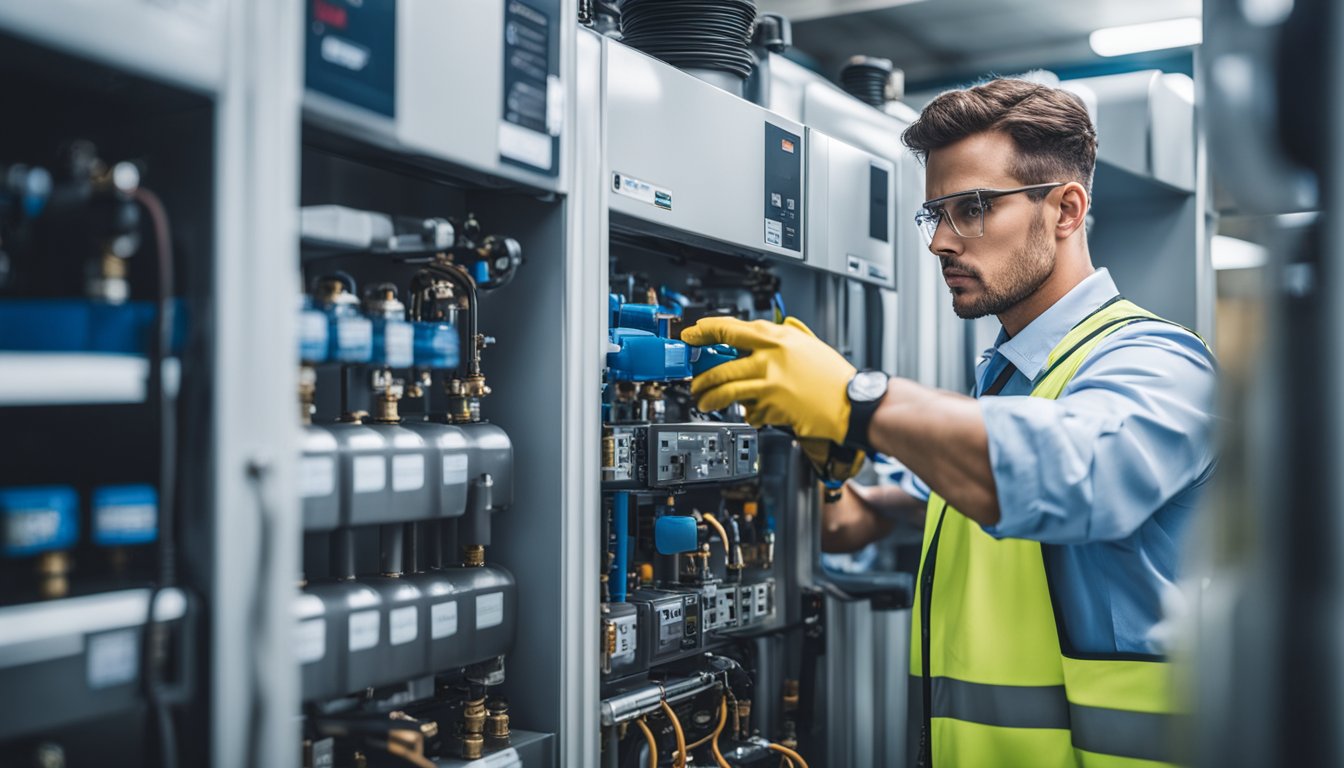
CO2 refrigeration systems offer versatile solutions for various industries. These systems provide efficient cooling and freezing capabilities while addressing safety concerns.
Industrial and Retail Solutions
CO2 refrigeration systems are well-suited for industrial and retail applications. In warehouses, they keep products fresh during storage and distribution. Supermarkets use them for display cases, walk-in coolers, and freezers.
We find CO2 systems excel in food processing plants. They maintain precise temperatures for meat, dairy, and produce. These systems also work well in ice rinks and cold storage facilities.
Retail stores benefit from CO2 refrigeration’s compact design. It saves floor space and reduces noise levels. This improves the shopping experience for customers.
CO2 Refrigeration System Configuration
The configuration of CO2 systems varies based on specific needs. Subcritical systems operate at lower pressures and are simpler to install. Transcritical systems handle higher pressures and offer greater efficiency.
Key components include:
- Compressors
- Heat exchangers
- Expansion valves
- Controllers
We can configure systems with parallel compression for improved performance. Ejectors may be added to boost efficiency in warmer climates.
Proper sizing is crucial. It ensures optimal cooling capacity and energy use. Engineers must consider load profiles, ambient temperatures, and backup requirements.
Safety and Efficiency in Design
Safety is a top priority in CO2 refrigeration design. High operating pressures require robust components and careful engineering. We use pressure relief valves and rupture discs as safeguards.
Leak detection systems are essential. They alert technicians to potential issues early. Regular maintenance checks help prevent problems before they occur.
Efficiency measures include:
- Heat reclaim systems
- Variable speed drives
- Advanced controls
These features reduce energy consumption and operating costs. Proper insulation and sealing minimize heat gain and improve system performance.
Training for operators and service technicians is crucial. It ensures safe handling of CO2 systems and proper emergency procedures.
Resources and Further Learning
We offer a wide range of resources to enhance your refrigeration and CO2 training. Our online modules cover essential topics in depth, allowing you to learn at your own pace.
Video tutorials provide visual demonstrations of key concepts and techniques. These are great for visual learners and those who want to see practical applications.
For hands-on experience, we have interactive simulations. These let you practice troubleshooting and system optimization in a risk-free environment.
Our extensive document library includes:
- Technical manuals
- Best practice guides
- Safety protocols
- Industry standards
We regularly update our content to reflect the latest advancements in refrigeration technology. This ensures you’re always learning cutting-edge information.
Registration for courses is simple through our user-friendly online portal. We offer flexible scheduling options to fit your needs.
Our training covers both refrigeration basics and advanced HVAC topics. Whether you’re new to the field or an experienced professional, we have courses suited to your level.
We’re committed to providing high-quality education. Our mission is to equip professionals with the knowledge and skills needed to excel in the refrigeration industry.
Over 90% of our students report feeling more confident in their skills after completing our courses. Join the thousands who have advanced their careers through our comprehensive training programs.