Closing the Pool for Winter: Easy Steps to Prepare for the Dark Times
As the colder months approach, it’s crucial to prepare your swimming pool for the winter. Winterizing your pool keeps it in good shape and saves money on costly repairs.
This process involves several steps, like adjusting the water level and ensuring it’s clean of debris. Paying attention to these details can make a big difference when it’s time to enjoy your pool again in the warmer months.
You’ll need to adjust your pool’s water level to safeguard against winter damage. In-gound pools require lowering water below the skimmer opening, while above-ground pools need about 4–6 inches below. This prevents damage caused by freezing water, which is a vital step in protecting your investment.
Consider using a shock treatment to bring the chlorine level to about 10 to 12 PPM. Once that’s done, wait for it to reduce to the normal level, around 1.5 to 3.5 PPM. Shocking your pool helps prevent algae growth and keeps the water clear for the next season. A well-maintained pool promises an easy opening when it’s time to swim again.
Getting Started with Pool Winterizing
Preparing your pool for winter requires careful attention to the water chemistry and a thorough cleaning. These steps help protect your pool from damage during the colder months.
Understanding Water Chemistry Before Closing
Before winterizing your pool, test the water’s chemical levels. It’s vital to check the pH level, alkalinity, and calcium hardness. Ideally, the pH should be between 7.2 and 7.6. Alkalinity should fall within the 80-120 ppm range, and calcium hardness should be between 200-400 ppm. Balanced water helps prevent corrosion and scaling during winter.
Ensure your chlorine levels are adequate but not too high. Add any necessary pool chemicals to adjust the levels if needed. A good practice is to shock your pool a few days before closing it to get rid of any contaminants. Following these steps helps maintain water quality and extends the life of your pool.
Cleaning Your Pool Thoroughly
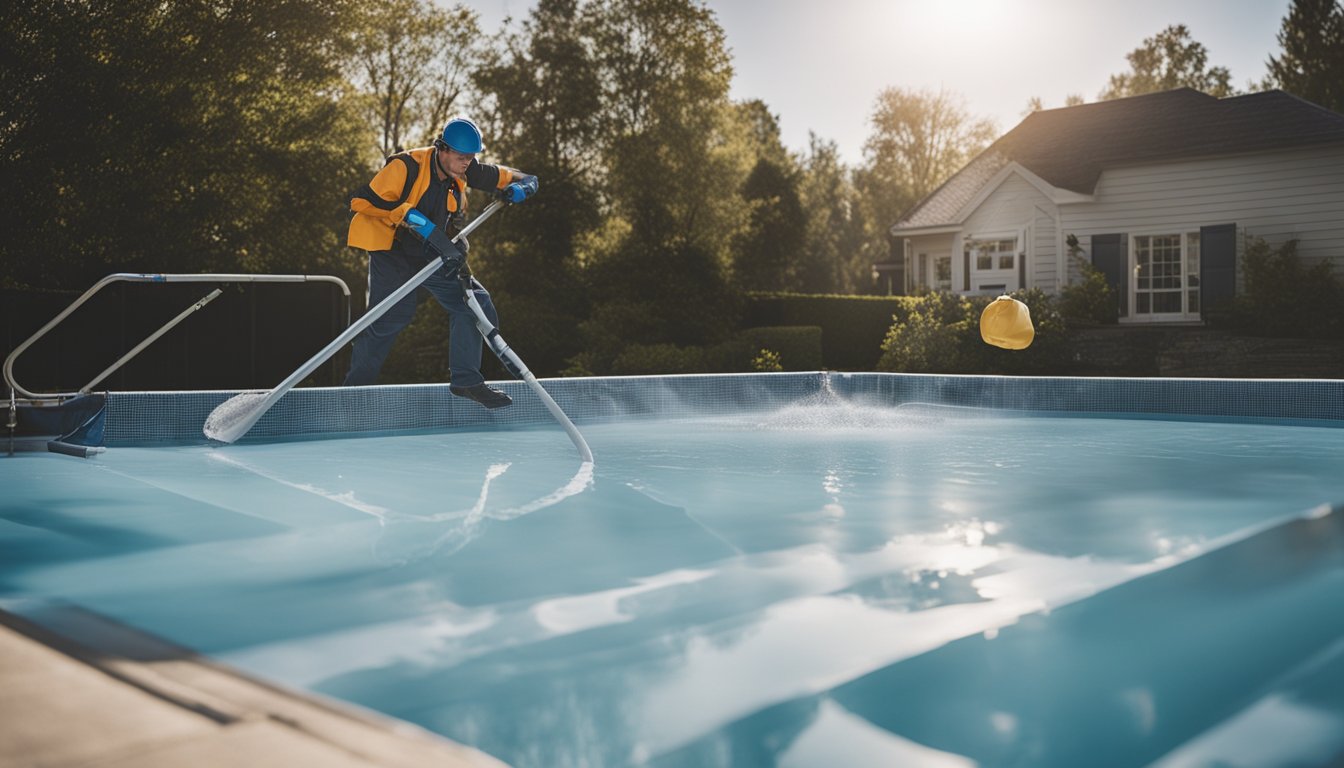
Thoroughly clean your pool before winterizing to prevent staining and algae growth. Start by using a pool vacuum to remove debris from the bottom. Brush the walls and the floor of your pool with a pool brush to dislodge dirt.
Next, employ a pool skimmer to clear leaves and smaller particles from the surface. Pay attention to corners and areas with poor circulation, as these can harbor debris. Clean or replace your pool filters to ensure they remain effective during the winter months.
By taking these cleaning steps, you create a more stable environment that makes opening the pool in spring much smoother.
Winterizing Pool Equipment and Accessories
When closing your pool for winter, it’s important to focus on protecting the equipment and accessories. Proper winterization prevents damage and ensures a smooth opening next season.
Pool Filter and Pump Maintenance
The pool pump and filter are essential for keeping water clean. Start by turning off the power to these devices. To protect your filter and pump, remove any drain plugs and allow them to drain completely. Backwash your filter to prevent buildup before storing it. Consider using a shop-vac to remove any remaining water from the pump. Storing these items indoors can further prevent damage. If possible, tilt the pump to ensure all water is out, reducing freeze risk.
Managing Plugs and Pool Lines
Focus on draining your pool lines to avoid freezing. Remove the plugs from return lines and add pool antifreeze to safeguard against any trapped water. If you use a gizzmo, it can be screwed into the skimmer to absorb ice expansion. Once drained, cover lines and outlets securely. This will help protect the plumbing until the pool is reopened. It’s crucial to ensure all connections are tight and secure so they don’t get damaged during the cold months.
Selecting the Right Pool Cover
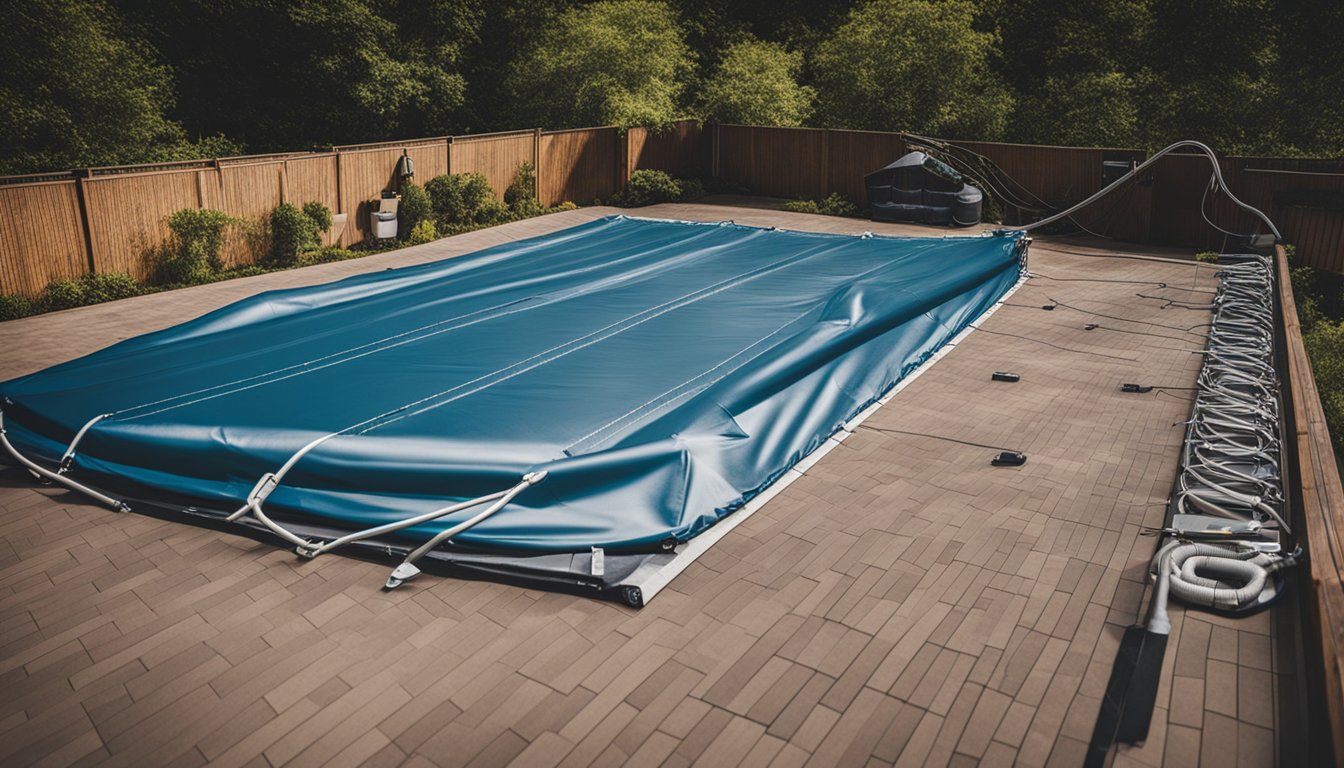
Choosing the appropriate winter pool cover is vital for protection. There are two common options: a safety cover and a standard winter cover. A safety cover is built from strong material to prevent debris and accidental entry. A standard winter cover is lighter but still keeps out dirt and leaves. You might also consider a pool cover pump to remove water accumulation. Using winterizing chemicals is recommended to keep the water clean under the cover. Accurate covering reduces stress on your pool frame and liner, ensuring a hassle-free reopening in the spring.
Protecting Your Pool from Winter Elements
To keep your pool safe during the winter, it’s important to adjust the water level and add winterizing chemicals, and also secure the pool cover. These steps help prevent freeze damage and keep everything in good shape for next season.
Adjusting the Water Level and Adding Winterizing Chemicals
First, adjust the water level to ensure your pool is ready for winter. Lower the water so it’s below the skimmer. This prevents freeze damage to the plumbing.
Use winterizing chemicals to protect the water. Add a pool shock to kill bacteria and a good algaecide to prevent algae growth. A metal sequestrant is also useful to stop metals in the water from staining your pool surface.
Regular checks make sure the pH is balanced and chlorine levels are stable. Proper chemical balance helps maintain a healthy pool, saving you time and effort when reopening it in the spring.
Securing and Protecting the Pool Cover
A strong and secure pool cover is key. Before placing it, setting a pool pillow in the water can help manage ice pressure by keeping the cover from collapsing under heavy ice.
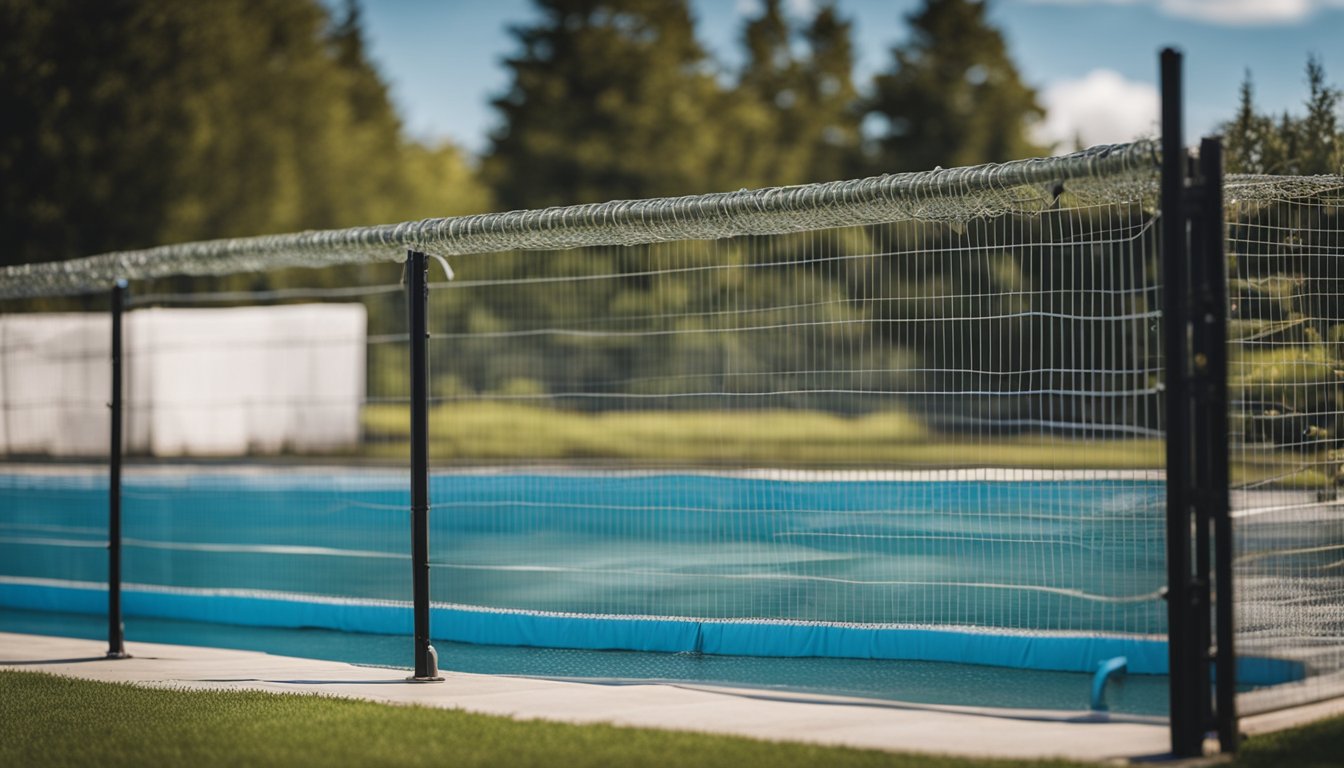
Ensure the cover is clean and free of tears or holes. Secure it firmly with water bags or weights to keep it in place. This prevents debris, like leaves and branches, from getting into the pool.
Lastly, check your pool cover periodically throughout the winter. This helps avoid any damage and ensures it lasts longer, providing reliable freeze protection. Regular maintenance keeps everything intact until you’re ready to dive in again.
Ongoing Winter Pool Care and Maintenance
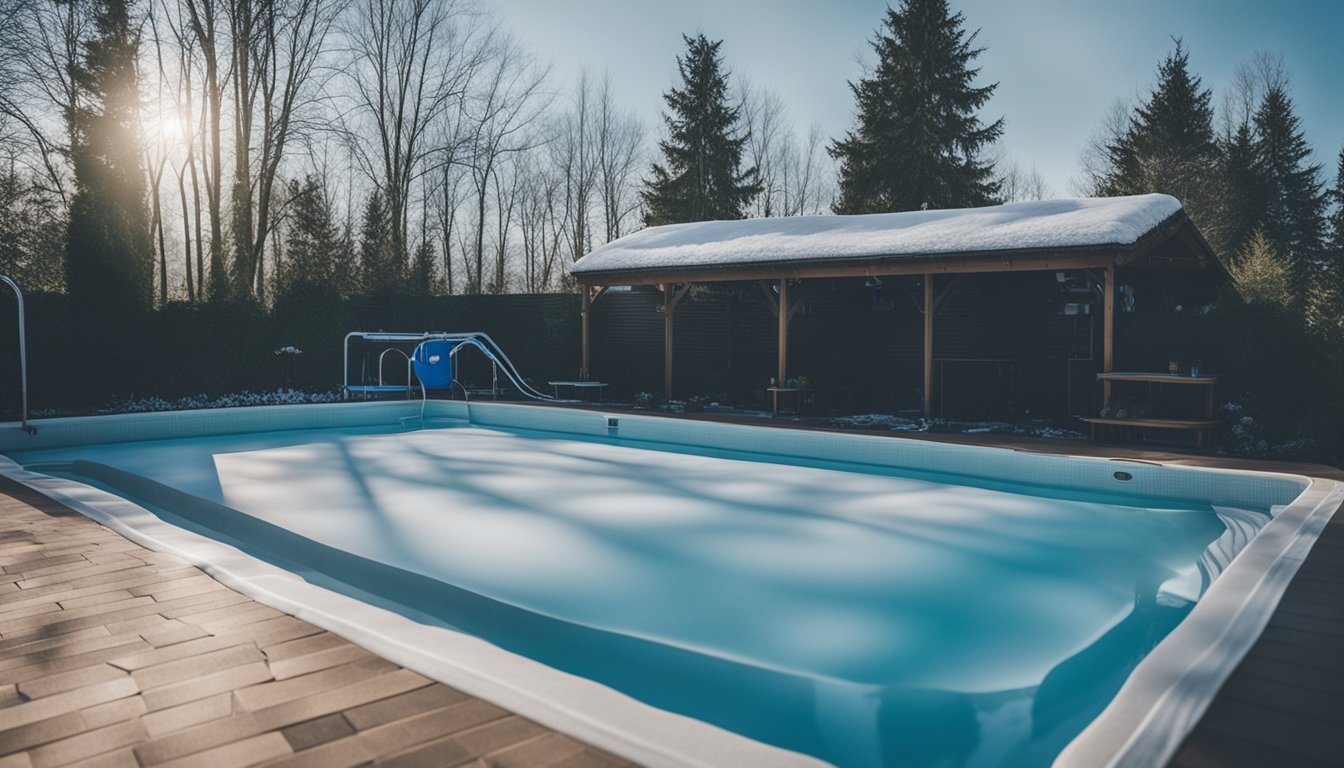
Regular Checks: During the winter, it’s important to keep monitoring your pool. Test your water’s pH, alkalinity, and cyanuric acid levels regularly. Use a pH increaser or alkalinity increaser if needed to maintain balance. This prevents issues like algae growth and bacteria buildup.
Use of a Cover Pump: Install a cover pump to remove excess water from the pool cover. This helps keep the cover intact and prevents damage from weight and freezing.
Algae and Bacteria Prevention: To stop algae from forming, consider using a winter pill or pool enzymes. These products release chemicals gradually to keep water clean and free from organisms.
Stain and Scale Prevention: Apply a stain and scale preventer to avoid mineral build-up on surfaces. This product keeps your pool looking nice and helps preserve the interior by reducing stains.
Safety Measures: Install a pool alarm for extra safety. An alarm can notify you of any unexpected movement in the pool area, offering peace of mind.
Maintenance Tips:
- Check the cover: Ensure it is snug and free of debris.
- Inspect equipment: Look at the pump and filters to ensure they are functioning as expected.
By following these steps, you can keep your pool in good condition during the winter months, making for a smooth reopening come spring.
Frequently Asked Questions
This section answers common questions about closing your pool for winter. Learn about steps to winterize different types of pools, selecting the right cover, essential chemicals, and what happens if you skip this important seasonal step.
What are the necessary steps to winterize an above-ground pool?
To winterize an above-ground pool, begin by lowering the water level about 4-6 inches below the skimmer. Remove and store pool accessories like ladders and covers. Add winterizing chemicals and ensure the water is clean before covering the pool with a winter cover for protection.
Can you guide me through the process of closing an inground pool for the season?
For inground pools, reduce the water level below the skimmer opening. Clean the pool thoroughly and balance the water chemistry. Use pool antifreeze in the plumbing, remove all accessories, and cover the pool securely. This helps protect your pool from damage during colder months.
What should I consider when choosing a pool winter cover?
When selecting a pool winter cover, ensure it fits well and is made of durable material. Covers should be designed to hold up against winter weather, providing protection from debris like leaves and branches. Some covers also offer UV protection, helping to keep water clear.
Which chemicals are essential for properly winterizing my pool?
Essential chemicals for winterizing include chlorine, algaecide, and pH balancers. Shock your pool with chlorine to kill bacteria, reducing levels to about 1.5-3.5 parts per million. An algaecide helps prevent algae growth while pH balancers ensure the water stays stable.
Are there any special considerations for closing a pool in colder climates like Canada?
In colder climates like Canada, it’s crucial to winterize thoroughly. Lower water levels more significantly, use a strong cover, and ensure pipes are drained properly. Consider adding antifreeze specifically designed for pools to prevent freezing in the plumbing system.
What risks am I facing if I decide not to winterize my pool?
Skipping winterization can lead to damage such as cracked pipes, equipment failures, and algae growth. These issues can be costly to repair and may delay pool opening in the spring. Proper winterization helps avoid these risks and keeps your pool in good condition.