Custom Orthotics Process, Cost, and Coverage in London, Ontario
Why it matters
Custom orthotics are not just insoles with a higher price tag. The process, paperwork, and design choices affect comfort, fit, and insurance reimbursement. In London, Ontario, small mistakes at the start can delay approval or leave you paying more out of pocket.
Initial consultation and physical examination
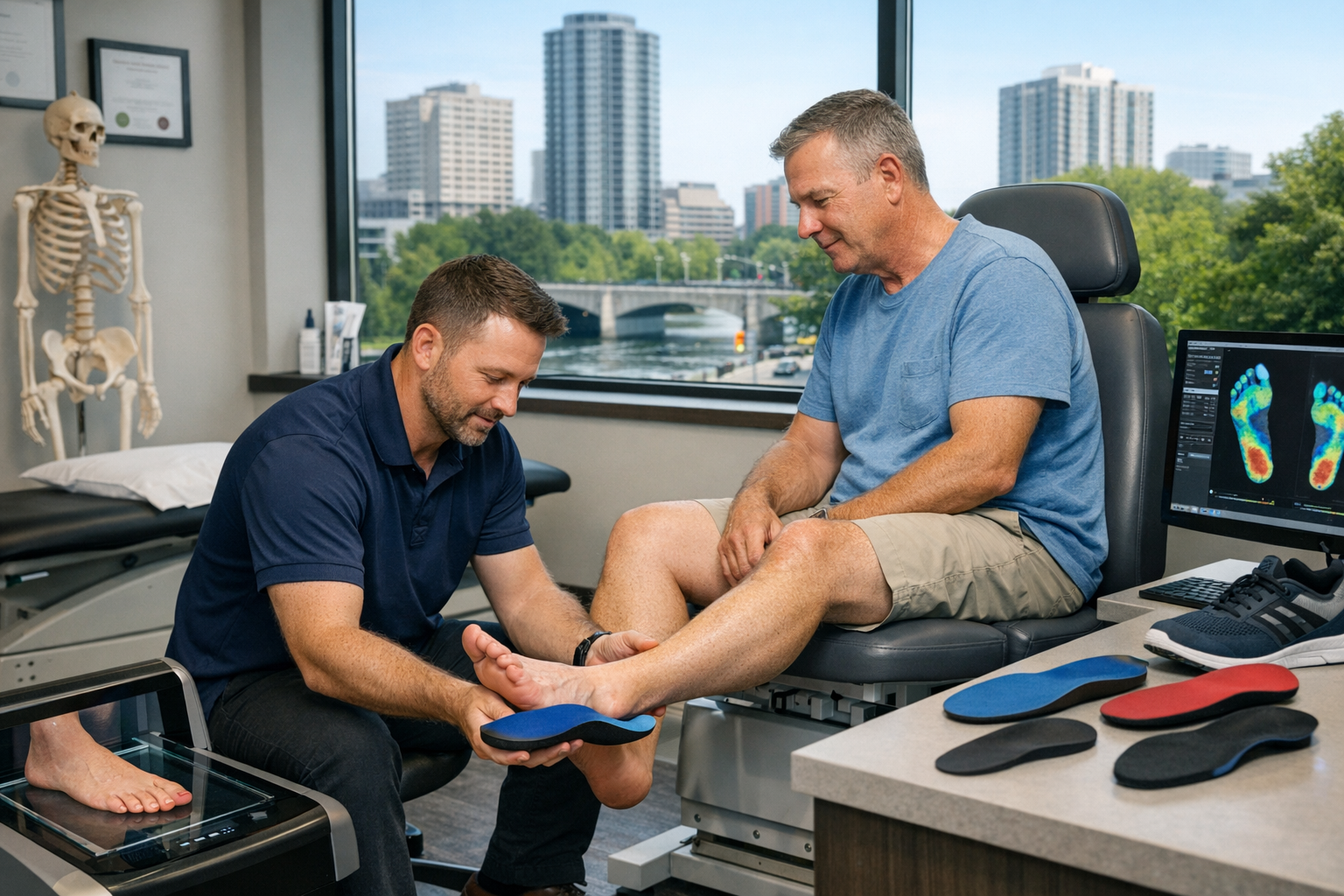
The first visit should do more than look at your shoes. A proper assessment usually includes your symptoms, injury history, gait, foot structure, and how you load each side while standing and walking.
This step matters because the wrong diagnosis leads to the wrong device. Heel pain, forefoot pain, flat feet, and high arches can all need different support strategies, and a generic template often misses that detail.
A rushed exam is a common failure point. If the provider skips range of motion testing or ignores knee and hip mechanics, the orthotic may feel supportive at first but still fail to address the actual source of pain.
Prescription requirements for custom orthotics in London, Ontario
Coverage often depends on more than the orthotics themselves. Many extended health plans require a prescription from an eligible medical professional before fabrication or before claim submission.
In London, Ontario, the exact rule depends on the insurer, not just the clinic. Some plans want the prescription dated before casting or scanning, while others also want a biomechanical assessment and a detailed receipt from the dispensing provider.
- Check who can write the prescription under your plan
- Confirm whether the prescription must be dated before the appointment
- Ask what wording or diagnosis the insurer expects on the claim
If you get the timing wrong, reimbursement can be denied even when the device is medically appropriate. That is why paperwork should be confirmed before you move ahead with casting or scanning.
Pricing factors based on materials and design complexity
The final price depends on the build, not just the clinic fee. Materials, shell rigidity, top cover choice, posting, and modifications for sports shoes or work boots can all change the total.
A simple pair for mild support needs usually costs less than a device built for complex alignment issues. If the design must control motion aggressively or fit difficult footwear, labor and fabrication time increase.
Insurance also does not always match the full invoice, which is why many patients review custom orthotics coverage before committing to a specific design. Choosing the cheapest option can backfire if the material compresses too quickly or does not hold correction under daily load.
Extended health benefits and insurance reimbursement
Most reimbursement problems happen because of documentation, not because orthotics are never covered. Insurers may ask for a prescription, bio-mechanical findings, proof of payment, and a receipt that clearly identifies the device as custom made.
Some plans also limit how often you can claim a pair. Others have a set dollar cap per year or per benefit period, which means a more complex device may leave a larger balance owing.
The tradeoff is simple. If you submit too early without complete documents, the claim may stall. If you wait too long and buy first without checking the rules, you may discover the plan excludes your provider type or only reimburses a portion.
Turnaround time for fabrication and delivery
Custom orthotics are not usually a same-day item. After the assessment and scan or cast, fabrication often takes days to a few weeks, depending on lab volume, design complexity, and whether any fit adjustments are needed at pickup.
In London, Ontario, turnaround can stretch during busy periods or when a prescription issue needs to be corrected before the lab proceeds. A device for a standard walking shoe may move faster than one needing special modifications for skates, safety boots, or narrow dress shoes.
Patients comparing custom orthotics cost should also ask what is included in that timeline, because follow-up adjustments can affect both value and convenience. The main risk is assuming pickup means the process is finished, when a small pressure point or heel slip may still need refinement.
Replacement timelines and warranty considerations
Custom orthotics do not last forever. Replacement timing depends on body weight, activity level, footwear type, and whether the device is worn daily for work or sport.
Many pairs last a few years, but the top cover may wear out sooner than the structural shell. If the shell cracks, the support changes fast, and continued use can bring symptoms back even if the orthotics still look usable at a glance.
- Ask how long the shell and top cover are expected to last
- Check what the warranty covers, defects or fit changes
- Confirm whether follow-up adjustments are included
A good replacement plan prevents guesswork. Before ordering, ask how the clinic handles wear, breakage, and refits so you know the real cost over time.